TL;DR
A sewage smell in a bathroom is usually one of four things: a dry U-bend trap that's stopped sealing out gas, a blocked or damaged vent stack, a perished seal around the toilet or a waste, or gas escaping past a partial blockage further down the drain. Run water into every plughole and flush every toilet to refill the traps — if the smell disappears, it was almost certainly a dry trap. If it doesn't, request a free quote online for a proper inspection rather than reaching for another air freshener.
The Four Common Causes
**A dry U-bend trap.** Every sink, shower, bath and toilet relies on a water-filled trap that physically blocks sewer gas from rising back up the pipe. Leave a fixture unused for a few weeks — a guest en-suite, a spare bathroom, a house sitting empty over a holiday — and that water simply evaporates, breaking the seal. This is especially common in Nottingham's older housing, where a second bathroom or downstairs cloakroom can go weeks without being touched.
**A blocked or damaged vent stack.** UK homes vent their drainage through a soil vent pipe (SVP) — usually running up the outside wall of the property and finishing above eaves level, as required by Building Regulations Approved Document H — or, on some internal branches, through an air admittance valve instead. If the SVP's open top is clogged with leaves, debris or the odd bird's nest, the pipe itself has cracked, or an air admittance valve has failed to reseat, that pressure has nowhere to go — and the resulting vacuum can pull sewer gas back through the nearest fixture instead.
**A perished pan connector or seal.** The toilet's outlet connects to the soil pipe via a flexible plastic or rubber pan connector, while the pan itself is screwed or bolted to the floor. That connector can perish, crack or work loose over time — especially if the toilet was ever refitted without properly reseating it — letting gas escape at the base rather than through the pan itself. The same applies to the rubber gasket under a bath or shower waste once it starts to perish.
**Gas escaping past a partial blockage.** A build-up further down the drain — grease, soap scale, root ingress — can slow flow enough to trap gas behind it. That pressure then finds the nearest weak point to escape through, often a toilet or a sink overflow, which is why the smell can persist even when every trap in the room is full.
Diagnosing It Yourself
A few checks help narrow it down before anyone needs to come out:
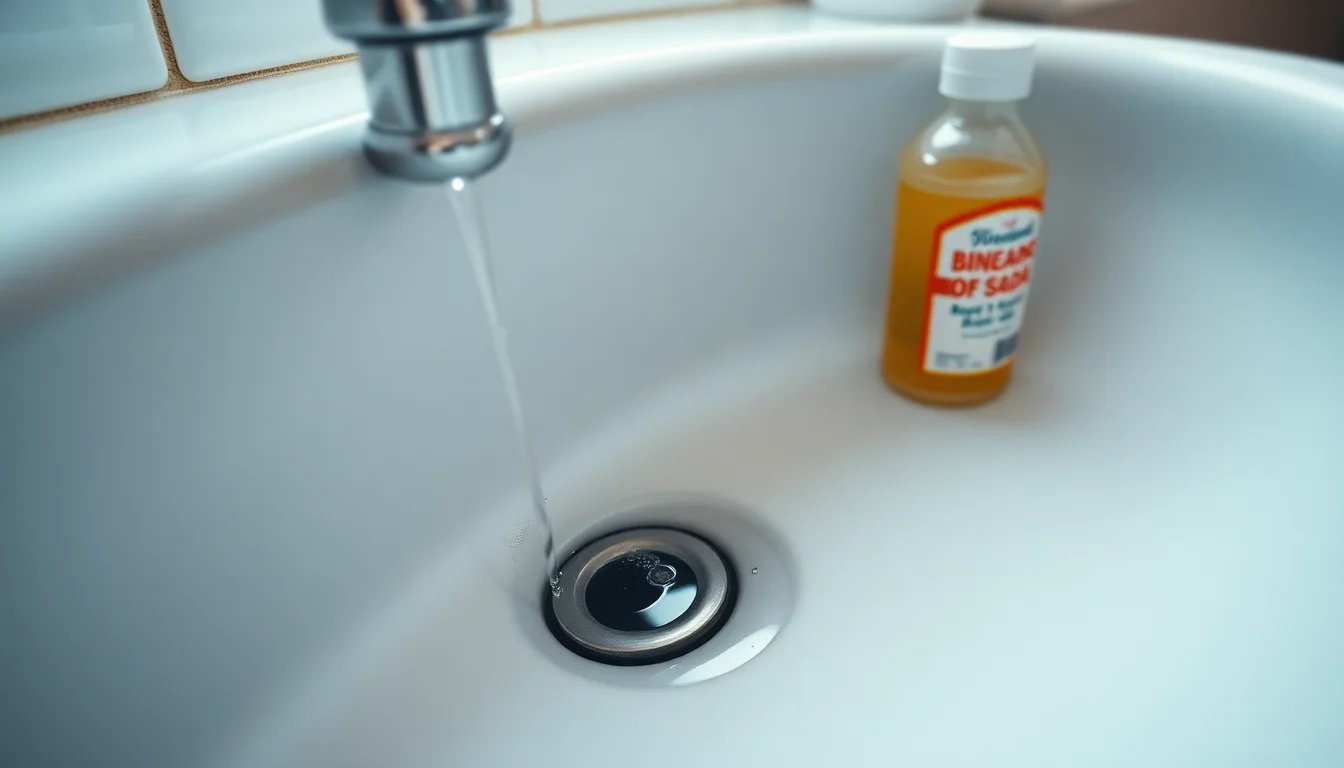
- **Refill every trap.** Run a decent flow of water into every plughole and flush each toilet twice, then wait a few minutes. If the smell fades or disappears, it was very likely a dry trap.
- **Listen for gurgling.** While water's draining, gurgling or bubbling from a fixture points to air struggling to move through the system — usually a venting issue or a blockage rather than a simple dry trap.
- **Note where it's strongest.** A smell concentrated at the toilet base suggests a failing pan connector or seal. One that's stronger near a plughole points more towards a vent or trap problem.
- **Check for slow drainage.** Anything draining sluggishly alongside the smell suggests a partial blockage downstream that's letting gas escape as it goes.
If refilling the traps clears it, you're done. If it doesn't, or you're also hearing gurgling and seeing slow drainage, the cause is something the traps alone won't fix.
When It Persists Despite Refilling the Traps
A smell that comes straight back after you've refilled every trap usually means the fault is in the pipework itself rather than anything you can flush away. In Nottingham's older streets, drainage laid over a century ago is simply old — joints in Victorian clay pipe were never designed to last indefinitely, and a century of general wear, ground settlement and nearby tree growth is often enough to crack or displace a section, letting gas escape at the fault line. Tree roots seeking moisture can work into those joints and create exactly the kind of partial blockage that traps gas upstream. Later pitch-fibre pipe, used to replace sections of ageing clay drain from the mid-20th century onward, can also lose its shape over time, narrowing the pipe and building up pressure behind the narrowing.
None of that is visible from inside the house, which is where a CCTV drain survey earns its keep — feeding a camera through existing access points to see cracks, root ingress or misalignment, graded against the WRc MSCC5 standard, without any digging. Where the picture's more complicated, a full drainage investigation maps the whole run and checks flow rate, so any repair addresses the actual fault rather than the smell alone.
A Safety Note on Hydrogen Sulphide
The "rotten egg" character of a sewage smell comes from hydrogen sulphide. At low concentrations it's simply unpleasant, but in a confined space it's a genuine hazard — irritating eyes and airways, and at higher concentrations causing headaches, nausea, or worse. A faint whiff after a dry spell away is one thing; a strong, persistent smell alongside gurgling, slow drains or any sign of backup is another, and shouldn't be masked with an air freshener and left. For anything that feels urgent, our emergency sewage service is there for exactly that, and our guide to emergency drain problems covers what to do in the meantime.
If the smell in your Nottingham bathroom isn't clearing after refilling the traps, request a free quote online and we'll get a proper look at what's actually causing it.
Frequently Asked Questions
**Why does my toilet smell like sewage even though it looks clean?** A clean-looking pan can still smell of sewage if the seal around its base has perished, or if the trap further down the system has run dry — neither is visible just by looking at the bowl. Refilling every trap in the room is the quickest way to test whether it's simply a dry-trap issue.
**Why does my shower drain smell like sewage?** Shower traps run dry faster than you'd expect if the shower isn't used daily, since there's less water sitting in a shallow shower trap to begin with. Running the shower for a minute to refill the trap usually resolves it if that's the cause.
**Why does my bathroom sink smell like a sewer?** Sink traps can dry out in the same way as any other fixture, which is the simplest and most common explanation. If refilling it doesn't fix the smell, or it keeps coming back, the more likely cause is a partial blockage or a failing seal on the waste pipe underneath the basin. Either is worth having checked properly rather than masking the smell and hoping it settles.
**Why does my bathroom only smell like sewage sometimes, such as after rain?** An intermittent smell that tends to appear after heavy rain often points to a drain surcharging under pressure — either from a high water table pushing up against the pipe, or a partial blockage further down the system. Both can briefly force gas back through the nearest fixture before levels drop again once the rain eases. It's worth investigating properly rather than waiting for the next downpour to confirm the pattern.