TL;DR
Start by clearing the plug or pop-up waste and the U-bend trap by hand, catching any standing water in a bowl underneath. Follow with bicarbonate of soda and vinegar down the plughole, left for five to ten minutes then flushed with hot (not boiling) water. If that doesn't clear it, a plunger with the overflow sealed by a wet cloth gives you far better suction. If none of that shifts it, the blockage is likely sitting deeper than the trap — request a free quote online and we'll take it from there.
Step-by-Step: Clearing the Trap and Household Remedies
Start with a bowl or bucket beneath the waste outlet to catch any standing water. Lift or unscrew the plug or pop-up waste mechanism — many of Nottingham's student houses in Lenton and Dunkirk have simple chrome pop-ups that turn anticlockwise by hand — and clear away whatever's collected around it and the U-bend trap beneath: hair, soap residue, a stray hair bobble, whatever it turns out to be. Rinse the trap under the tap and refit it, making sure the seal sits snugly before you turn the water back on.
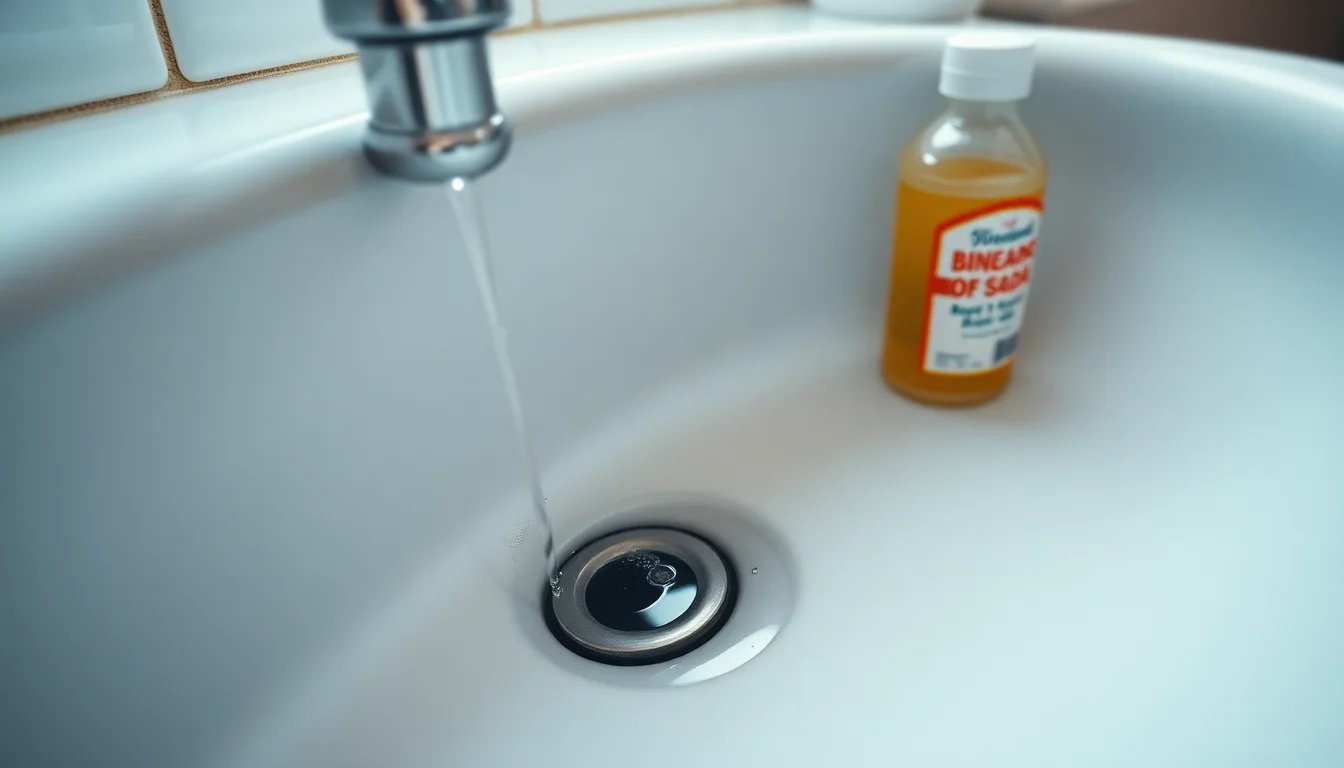
If it's still draining slowly at that point, move on to bicarbonate of soda and vinegar. Pour around half a cup of bicarbonate of soda straight down the plughole, followed by an equal measure of white or malt vinegar. It will fizz — leave it for five to ten minutes to work on any organic build-up, then flush through with hot water from the tap. Avoid boiling water if the pipework is plastic, since the sudden heat can weaken joints over time.
If flow is still restricted, a plunger provides the mechanical force the chemical reaction can't. Block the overflow opening with a damp cloth first — this stops air escaping and dramatically improves suction — then seat the plunger cup firmly over the plughole and pump for fifteen to twenty seconds. Lift it sharply on the last stroke to check whether water's now draining freely, and repeat once or twice if not. Trap, bicarbonate of soda and vinegar, then plunger, in that order, clears the large majority of minor bathroom blockages we see across Nottingham and the wider county.
Why Bathroom and Kitchen Drains Block Differently
Bathroom drains — sinks, showers and baths — clog mainly because hair combines with soap scum to form a sticky mat that catches on the inside of the pipe and keeps growing. It builds up faster than you'd think in a shared bathroom, which describes a lot of Nottingham's terraced houses and multi-occupancy student lets around Lenton and Hyson Green, where several people are using the same shower every morning.
Kitchen sinks block for an entirely different reason: fat, oil and grease, generally shortened to FOG. Hot fat goes down the plughole as a liquid, but as it travels through cooler pipework further from the tap it solidifies against the pipe wall and starts trapping food particles as it goes. Over weeks this builds into a hard, waxy blockage that barely responds to bicarbonate of soda and vinegar — the fizzing is simply an acid neutralising an alkali, leaving a near-neutral solution with nothing left to cut through solidified fat — which is exactly why the method that clears a hair-clogged shower drain in minutes can do almost nothing for a kitchen sink. Knowing which of the two you're dealing with saves you repeating a method that was never going to work on that particular blockage.
Preventing the Next One
A hair catcher over the plughole, emptied weekly, stops most bathroom blockages before they start, and running the shower on hot for the last few seconds helps flush soap residue through rather than letting it settle. In the kitchen, wiping greasy pans with kitchen roll before they go anywhere near the sink, and keeping a container for used cooking oil rather than pouring it down the plughole — in line with Severn Trent Water's guidance on keeping fat, oil and grease out of the drains — deals with FOG at the source rather than after the fact.
For more detail specifically on stopping kitchen blockages before they start, see our guide to preventing kitchen drain blockages. The same habits work whether you're in a West Bridgford family semi with a household bathroom, or a shared house in Lenton with three people using one shower — consistency matters more than any single trick.
When It's Deeper Than the Trap
If you've cleared the plug, cleaned the U-bend, tried bicarbonate of soda and vinegar, and plunged with no real improvement, the obstruction is very likely sitting further along the pipework than any of those methods can reach. A few signs point to this specifically:
- Plunging and trap-cleaning make no noticeable difference to how fast it drains
- More than one fixture — a sink, a shower, sometimes a toilet — starts draining slowly or gurgling around the same time
- You hear gurgling from a nearby drain when running water somewhere else entirely
- A smell persists even once the visible parts of the waste are properly clean
Any of those means it's a job for the right equipment rather than another attempt with a plunger. We handle sink-specific blockages through our blocked sink service and bath-specific ones through our blocked bath service, and for anything sitting beyond the U-bend in the wider system, our general blocked drains service covers inspection, clearance and getting flow properly restored across Nottingham and Nottinghamshire.
The only thing left to do at that point is request a free quote online and let us take a proper look with the right tools rather than guessing further.
Frequently Asked Questions
**How do you unblock a bathroom sink without a plunger?** Clearing and rinsing the U-bend trap by hand solves a surprising number of bathroom sink blockages on its own, since that's the point where hair and soap scum most often catch. Follow it with bicarbonate of soda and vinegar left to work for several minutes if the trap alone doesn't fix it.
**How do you clear hair out of a shower drain?** Most shower drain hair blockages sit just below the plug or grate and can be pulled out by hand once the cover is lifted — wearing gloves makes it far less unpleasant. For anything further down, bicarbonate of soda and vinegar followed by a plunger with the overflow sealed usually finishes the job.
**Can bicarbonate of soda and vinegar actually unblock a shower drain?** It works well on the soap-and-hair build-up that causes most minor shower blockages, since the fizzing reaction helps loosen organic material clinging to the pipe wall. It's far less effective on anything solid or sitting deeper in the system, which is where a plunger or professional help comes in.
**What do you do if a shower drain won't clear and water keeps standing?** Standing water that won't budge after trap-cleaning, bicarbonate of soda and vinegar, and a plunger usually means the blockage is beyond what household methods can reach. At that point it's worth having it looked at properly rather than repeatedly trying the same steps.