TL;DR
Long Eaton's low-lying position at the meeting point of the River Trent and River Erewash gives it a high water table, a floodplain that surcharges quickly in heavy rain, and a mix of century-old clay pipes in the town centre with shallower modern plastic drainage on the newer estates. Between them, these conditions produce frequent slow drains, silt-related blockages, and the occasional flooded gully after a wet spell. We handle drain unblocking, CCTV surveys, repairs and emergency call-outs across the town and its fringe villages — request a free quote online if you're dealing with a drain that won't clear.
Why Long Eaton's Geography Causes Drainage Problems
Long Eaton sits where the Trent meets the Erewash, on a shallow floodplain with a naturally high water table. That groundwater pushes up against buried pipework year-round, which reduces the effective capacity of drains even before anything is blocking them. In the town centre, many of the Victorian lace-trade terraces still run on the original clay pipes laid over a century ago — narrow-bore, prone to root ingress at the joints, and gradually silting up as groundwater carries sediment into the system.
Further out, the estates around Toton and Sawley use PVC or polypropylene drainage that resists corrosion but was often laid with shallow gradients to suit the flat local topography. A shallow fall means water moves slowly, solids settle rather than getting flushed through, and what looks like a robust modern system can still block up during a prolonged wet spell. For a fuller picture of how we work across the town, see the Long Eaton location page.
Victorian Terraces Near the Market Place and the Erewash Canal
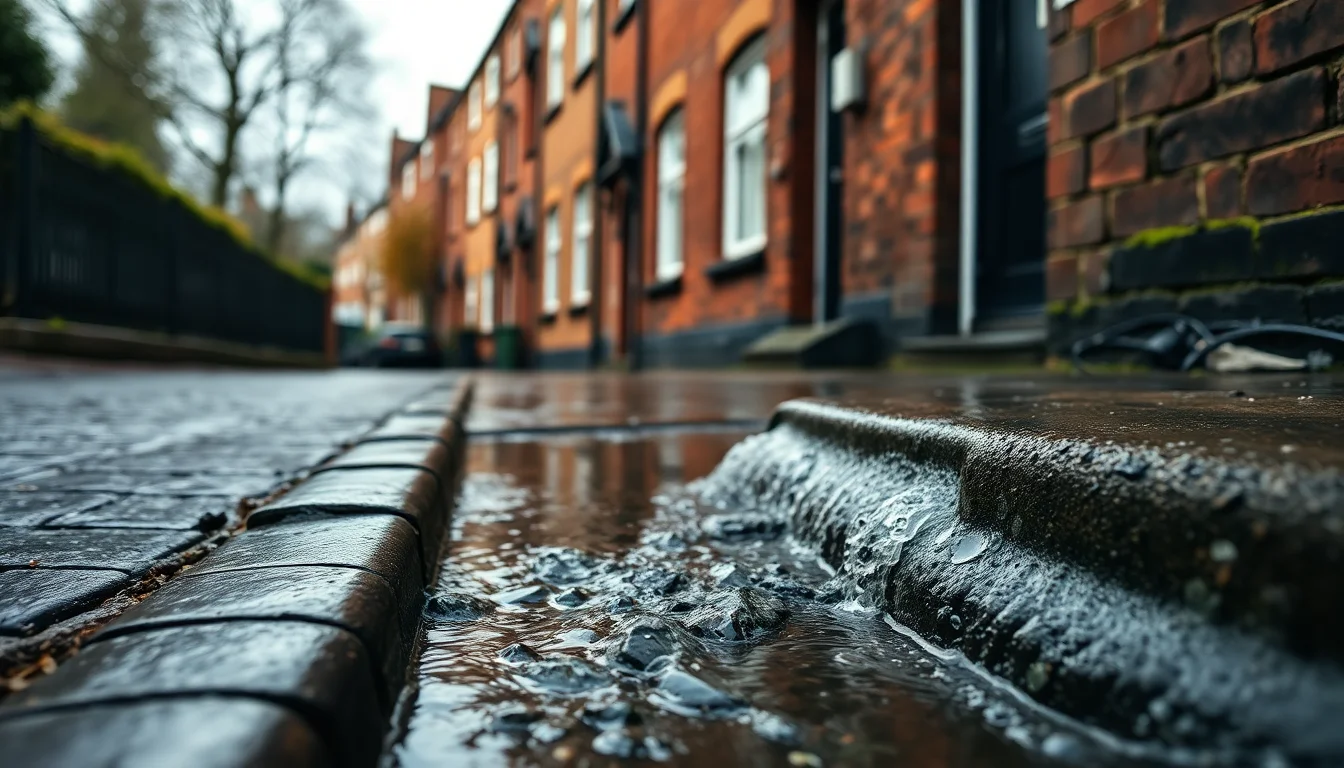
The historic core around Long Eaton Market Place is lined with terraces originally built for lace-mill workers, and their drainage is exactly what you'd expect from that era: small-diameter clay pipes, often 100mm or less, carrying foul waste from each property into the public sewer network that Severn Trent Water maintains beneath the surrounding streets. During intense rainfall, a separate surface-water system of highway gullies has to cope with run-off at the same time, and on this low-lying ground the combination of limited pipe capacity and a high water table means both systems can struggle — sometimes appearing as damp patches on ground-floor flooring or an unpleasant smell that lingers after the rain has stopped.
Silt carried up from the water table settles in the low points of these older runs, gradually narrowing the bore and making the next heavy downpour worse than the last. Because the streets and the historic fabric around them matter, we clear silt and repair cracked sections using techniques that don't require digging up the pavement wherever the pipe condition allows it.
Four Things Long Eaton Residents Typically Need
Most enquiries we get from Long Eaton fall into one of four categories, and it's worth knowing the difference before you get in touch:
- **Drain unblocking** — clearing fat, silt, roots or other obstructions using rods, high-pressure jetting or, where needed, mechanical cutting, to restore flow without damaging the pipe.
- **CCTV drain surveys** — a waterproof camera fed through existing access points to show cracks, displaced joints, root intrusion or collapse, so we know whether a simple clear is enough or whether repair work is needed.
- **Drain repairs** — anything from a localised patch or resin lining on an ageing clay pipe, to replacing a short section of poorly graded plastic drain on a newer estate.
- **Emergency response** — for situations where a blockage has caused sewage to back up into a property or a garden is flooding, prioritised so the immediate problem is contained first.
You can see each of these set out for the town specifically: drain unblocking in Long Eaton, drain repairs in Long Eaton, and CCTV drain surveys in Long Eaton.
The Long Eaton Fringe: Toton, Sawley, Sandiacre and Beyond
The drainage picture shifts as you move out from the centre. Toton is mostly post-war semi-detached and detached housing on shallow-laid plastic drains, where blockages tend to show up as slow-draining sinks or a gurgling toilet, often worse in autumn once leaves and garden debris wash into gullies. Sawley mixes older terraces near the canal, which share the town centre's clay-pipe issues, with newer estates on slightly higher ground where the problem is more often insufficient fall than pipe age.
Sandiacre, just to the north, has a similar split between Victorian workers' cottages and 1970s housing, with groundwater fluctuations near the Erewash Canal occasionally pushing silt into the pipes serving the lower streets. Breaston, Draycott, Chilwell and Stapleford follow broadly the same pattern — older cores with clay pipework, newer estates with plastic systems, and floodplain-adjacent streets in Chilwell and Stapleford that benefit from a periodic check rather than waiting for a problem to show itself.
Who Handles Blocked Drains in Long Eaton?
A local engineer who understands the town's floodplain geology and its mix of Victorian and modern housing stock — someone who knows that a clay pipe near the Market Place needs a different approach to a shallow plastic drain in Toton, and who carries the right equipment for both. We diagnose the cause first, then clear or repair accordingly, rather than treating every blockage the same way.
If you're dealing with a slow drain, a blocked gully, or a drain that keeps backing up after rain anywhere from the town centre out to Sawley or Sandiacre, request a free quote online and we'll arrange a visit.
Frequently Asked Questions
**What usually causes blocked drains in Long Eaton?** The two most common causes are silt build-up from the town's high water table, which narrows older clay pipes over time, and shallow-graded modern drainage on newer estates that lets solids settle instead of flushing through. Root intrusion from canal-side and garden vegetation is also common, particularly in the older streets near the centre.
**Do you cover Sawley, Toton and Sandiacre as well as Long Eaton itself?** Yes — we work across the whole Long Eaton area, including Sawley, Toton, Sandiacre, Breaston, Draycott, Chilwell and Stapleford. Each of these areas has its own mix of Victorian clay pipework and newer plastic drainage on later estates, so we adjust our approach to whichever a property has. Getting the diagnosis right for the specific area matters as much as the fix itself.
**How do I know if I need a drain unblock or a full repair?** A straightforward unblock clears whatever is obstructing the flow, and for a one-off blockage that's usually all that's needed. If the same drain keeps blocking, though, or a CCTV survey shows a cracked, displaced or root-affected section, clearing it again only delays the next one. In that case a repair is what actually resolves the underlying fault.
**Is a CCTV survey always needed before a repair in Long Eaton?** Not always — a clear, one-off blockage with an obvious cause doesn't usually need one. For older Victorian pipework, or anywhere a blockage keeps recurring without an obvious cause, a survey lets us see the exact condition of the pipe first. That way, any repair is targeted at the real problem rather than being guesswork.